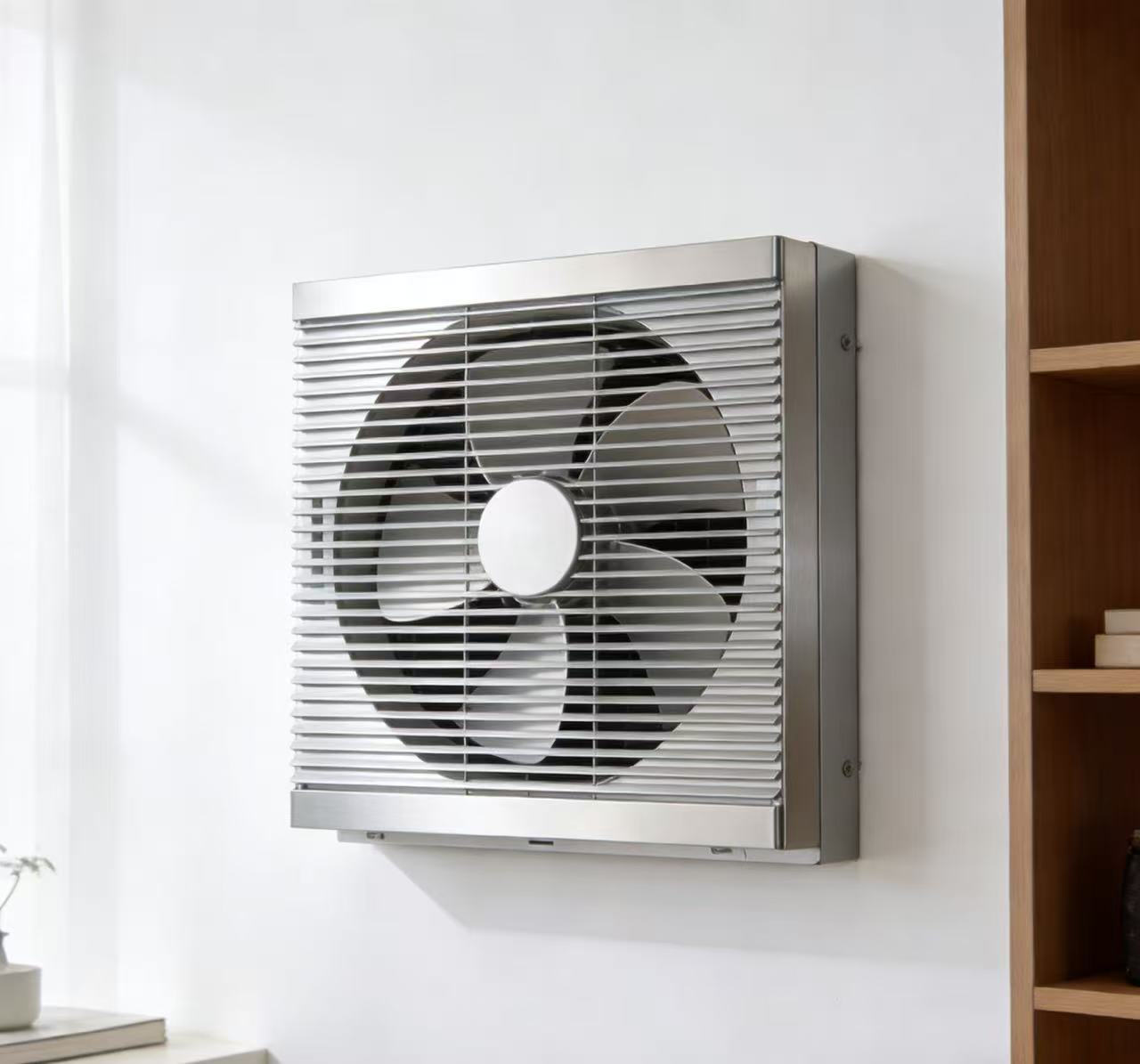
Recently, with the growing global emphasis on building energy efficiency, indoor air quality, and fire safety, the core components of Heating, Ventilation, and Air Conditioning (HVAC) systems are experiencing a significant wave of technological innovation and system integration. Leading manufacturers and solution providers in the industry are focusing on performance optimization and intelligent coordination of key components such as Louvers, Ventilation Fans, Dehumidifiers, Fire Dampers, and Draught Fans, aiming to create more efficient, safer, and more comfortable building environments.
1. Intelligent Coordination and Precise Control: From Isolated Components to Integrated Systems
1. Intelligent Coordination and Precise Control: From Isolated Components to Integrated Systems
Traditional HVAC components often operate independently. The current trend is to achieve deep integration through the Internet of Things (IoT) and Building Automation Systems (BAS).
Louvers are no longer just simple airflow directors or rain protection elements. New intelligent louvers can automatically adjust their opening angle based on outdoor wind direction, speed, temperature, humidity, and indoor pressure requirements. They coordinate with Ventilation Fans to maximize the use of natural ventilation while ensuring minimum fresh air intake, thereby reducing fan energy consumption. Some high-end products already integrate air quality sensors to automatically reduce opening during polluted weather.
Ventilation Fans, as the core power source for air movement, now commonly feature variable frequency drive technology and high-efficiency motors. The latest advancement lies in their close collaboration with Fire Dampers. Once a fire alarm is triggered, the fan can automatically switch to a preset smoke extraction mode, while relevant fire dampers act swiftly to ensure controlled smoke flow, buying crucial time for evacuation and firefighting.
2. Deep Synergy Between Energy Efficiency and Air Quality
Louvers are no longer just simple airflow directors or rain protection elements. New intelligent louvers can automatically adjust their opening angle based on outdoor wind direction, speed, temperature, humidity, and indoor pressure requirements. They coordinate with Ventilation Fans to maximize the use of natural ventilation while ensuring minimum fresh air intake, thereby reducing fan energy consumption. Some high-end products already integrate air quality sensors to automatically reduce opening during polluted weather.
Ventilation Fans, as the core power source for air movement, now commonly feature variable frequency drive technology and high-efficiency motors. The latest advancement lies in their close collaboration with Fire Dampers. Once a fire alarm is triggered, the fan can automatically switch to a preset smoke extraction mode, while relevant fire dampers act swiftly to ensure controlled smoke flow, buying crucial time for evacuation and firefighting.
2. Deep Synergy Between Energy Efficiency and Air Quality
In the context of pursuing "Dual Carbon" goals and healthy buildings, the role of Dehumidifiers has become increasingly critical, especially in high-humidity regions or in humidity-sensitive environments like data centers, healthcare facilities, and warehouses. Modern dehumidifiers not only strive for higher energy efficiency ratios but also emphasize synergy with the overall ventilation system. They can coordinate with the ventilation system to intelligently choose between introducing fresh air for dehumidification or activating return air dehumidification mode based on the enthalpy value of the outside air. This avoids the energy loss associated with re-heating caused by excessive cooling, enabling independent and precise control of temperature and humidity.
Simultaneously, the design and application of Draught Fans—typically referring to devices used to enhance air circulation or induce airflow in specific areas—have become more sophisticated. In large spaces (such as airport terminals, factory workshops), they are strategically deployed to work in conjunction with the main ventilation system, eliminating local dead spots, ensuring uniform distribution of temperature and humidity, and improving overall system efficiency and comfort.
3. Rising Fire Safety Standards Drive Component Innovation
Fire safety is paramount for buildings. The technical standards for Fire Dampers are continuously being upgraded. Beyond meeting higher fire resistance rating requirements, modern fire dampers emphasize:
Reliability: Featuring fail-safe designs to ensure automatic closure upon power or signal failure.
Monitorability: Equipped with position sensors to provide real-time feedback on valve status to a central monitoring platform, facilitating routine maintenance and status confirmation during a fire.
Airtightness: Higher standards for air leakage rates, ensuring effective containment of smoke and flame spread during a fire.
These enhancements make fire dampers not only safety components but also crucial elements in maintaining the operational efficiency of daily ventilation systems.
Industry Outlook
Reliability: Featuring fail-safe designs to ensure automatic closure upon power or signal failure.
Monitorability: Equipped with position sensors to provide real-time feedback on valve status to a central monitoring platform, facilitating routine maintenance and status confirmation during a fire.
Airtightness: Higher standards for air leakage rates, ensuring effective containment of smoke and flame spread during a fire.
These enhancements make fire dampers not only safety components but also crucial elements in maintaining the operational efficiency of daily ventilation systems.
Industry Outlook
Industry analysts suggest that the future development of key HVAC components will follow three main trajectories: Firstly, higher individual component efficiency and reliability. Secondly, deeper digital and intelligent integration capabilities. Thirdly, optimization of total lifecycle costs, including installation, maintenance, and recyclability. As artificial intelligence algorithms become more prevalent in building management, systems composed of louvers, fans, dehumidifiers, fire dampers, and other components will be capable of predictive control and self-optimization, achieving a leap from "responding to demand" to "anticipating demand."
This system upgrade driven by innovations in key components signifies the HVAC industry's deep transformation from traditional equipment supply towards outcome-oriented integrated solution services, providing a solid technological foundation for smart buildings and sustainable development.