Recent upgrades to international green building certification systems have introduced stricter scoring criteria, imposing more demanding requirements for the annual energy efficiency, health metrics, and climate adaptability of building ventilation systems. This shift is driving a transition from "standardized production" to "adaptive design" for key components like louvers, ventilation fans, dehumidifiers, fire dampers, and draught fans, triggering a profound transformation across the industry chain.
1. Climate-Responsive Components Become a New High Ground for Technological Competition
1. Climate-Responsive Components Become a New High Ground for Technological Competition
With the increasing frequency of extreme weather events, building ventilation systems face unprecedented complexity challenges:
Smart Louvers innovatively integrate weather data interfaces, allowing them to dynamically adjust opening and closing strategies based on real-time parameters such as PM2.5 and pollen concentrations. The newly developed "Anti-Dust Accumulation Louver," featuring special coatings and streamlined design, can extend cleaning and maintenance cycles by 300% in dust storm-prone regions.
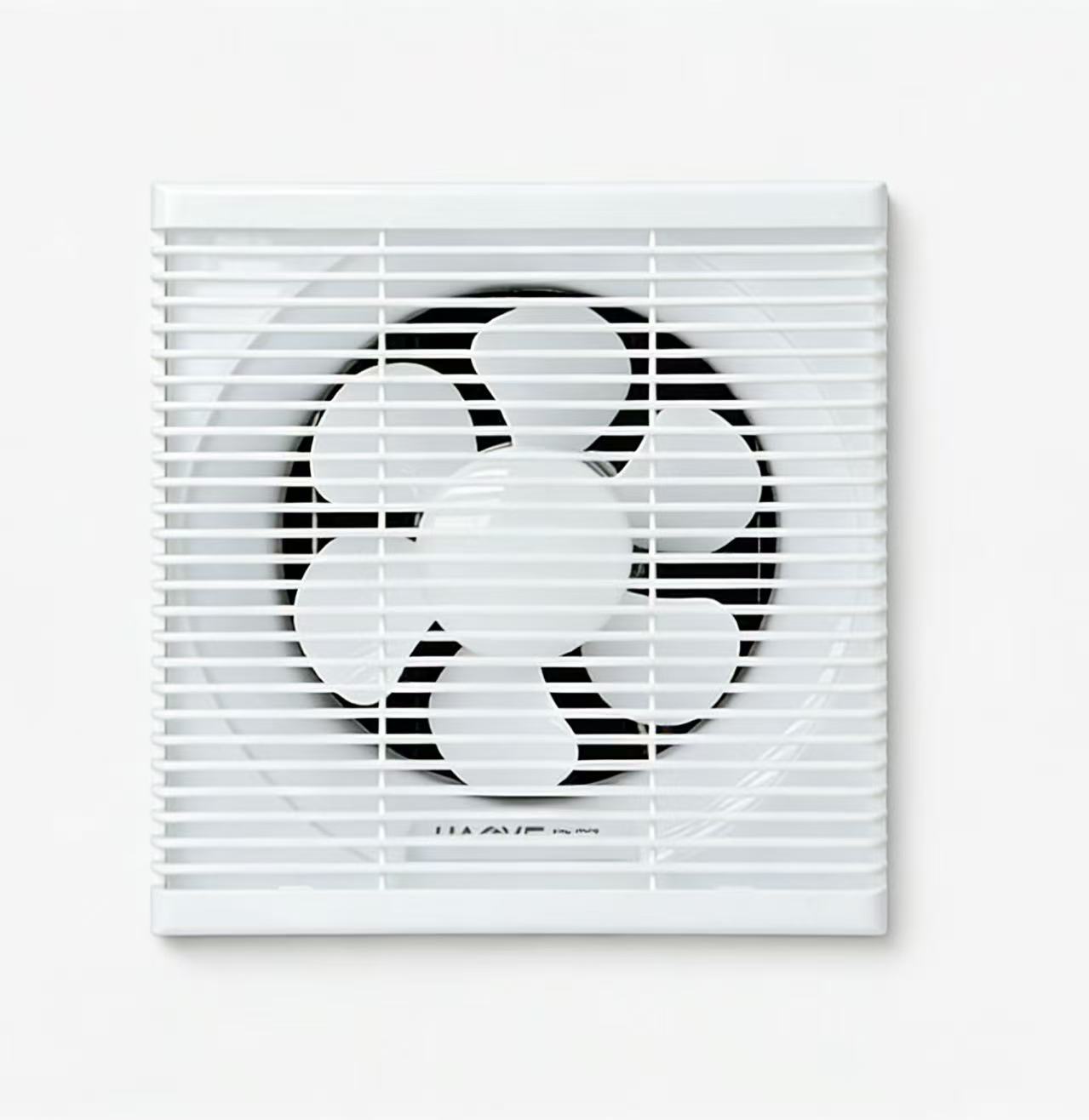
Adaptive Ventilation Fans are equipped with pressure-independent control technology, enabling automatic airflow adjustment based on changes in building occupancy. A recent maglev fan solution introduced by a multinational manufacturer achieves a part-load efficiency of up to 92% by eliminating mechanical friction, while operating at a noise level below 40 dB.
2. Integrated Innovation in Health and Safety Standards
Smart Louvers innovatively integrate weather data interfaces, allowing them to dynamically adjust opening and closing strategies based on real-time parameters such as PM2.5 and pollen concentrations. The newly developed "Anti-Dust Accumulation Louver," featuring special coatings and streamlined design, can extend cleaning and maintenance cycles by 300% in dust storm-prone regions.
Adaptive Ventilation Fans are equipped with pressure-independent control technology, enabling automatic airflow adjustment based on changes in building occupancy. A recent maglev fan solution introduced by a multinational manufacturer achieves a part-load efficiency of up to 92% by eliminating mechanical friction, while operating at a noise level below 40 dB.
2. Integrated Innovation in Health and Safety Standards
Following the COVID-19 pandemic, global building codes have introduced new requirements for indoor microbial control:
Medical-Grade Dehumidifiers are now being applied in high-end commercial buildings. Equipped with UV photocatalytic modules, they simultaneously achieve humidity regulation and air disinfection, demonstrating a pathogen inactivation rate of 99.97% in cleanroom environments meeting surgical suite standards.
Intelligent Fire Dampers break through the limitations of traditional fire safety products by integrating VOC monitoring and early fire warning capabilities. Utilizing nano-level aerosol detection technology, they can provide warnings 20-30 minutes before open flame appears, securing crucial response time for active fire protection systems.
3. Paradigm Shift in System Integration Models
Medical-Grade Dehumidifiers are now being applied in high-end commercial buildings. Equipped with UV photocatalytic modules, they simultaneously achieve humidity regulation and air disinfection, demonstrating a pathogen inactivation rate of 99.97% in cleanroom environments meeting surgical suite standards.
Intelligent Fire Dampers break through the limitations of traditional fire safety products by integrating VOC monitoring and early fire warning capabilities. Utilizing nano-level aerosol detection technology, they can provide warnings 20-30 minutes before open flame appears, securing crucial response time for active fire protection systems.
3. Paradigm Shift in System Integration Models
The industry is undergoing a design revolution from "component assembly" to "system symbiosis":
Ventilation systems driven by Digital Twin technology can complete dynamic simulations for all 8,760 hours of a year before construction, accurately predicting the optimal placement strategy for draught fans across different seasons, leading to an 18-25% reduction in energy consumption for large-space buildings.
Blockchain technology is being introduced for full lifecycle component management. Each fire damper's test data and maintenance records generate an immutable digital record, significantly enhancing safety control in super-tall buildings.
4. Supply Chain Restructuring and Emerging Industrial Ecosystem
Ventilation systems driven by Digital Twin technology can complete dynamic simulations for all 8,760 hours of a year before construction, accurately predicting the optimal placement strategy for draught fans across different seasons, leading to an 18-25% reduction in energy consumption for large-space buildings.
Blockchain technology is being introduced for full lifecycle component management. Each fire damper's test data and maintenance records generate an immutable digital record, significantly enhancing safety control in super-tall buildings.
4. Supply Chain Restructuring and Emerging Industrial Ecosystem
New technical requirements are reshaping the industrial landscape:
Modular design is becoming mainstream. A "plug-and-play ventilation unit" launched by a European company pre-integrates five core components into a standardized rack, reducing on-site installation time by 70%.
A materials revolution is occurring in parallel. Graphene coatings enable self-cleaning capabilities for ventilation components, while shape-memory alloys allow fire dampers to automatically deform and seal under high temperatures. These innovative materials are moving from the laboratory to mass production.
Industry Impact Assessment
According to the latest International Energy Agency report, buildings utilizing next-generation adaptive HVAC systems show a 34-41% reduction in annual ventilation-related energy consumption compared to traditional systems. Furthermore, benchmark projects in places like Singapore and Dubai indicate such systems can improve indoor environmental satisfaction scores by 28 percentage points.
Over the next three years, with the mandatory implementation of Digital Product Passports (DPP) in the European Union, each ventilation component will carry comprehensive carbon footprint data. This signifies that industry competition will transcend mere competition over technical specifications, entering a new dimension of full lifecycle carbon efficiency management. Companies capable of providing integrated "hardware + data + service" solutions are defining the value standards for the next generation of building ventilation systems.