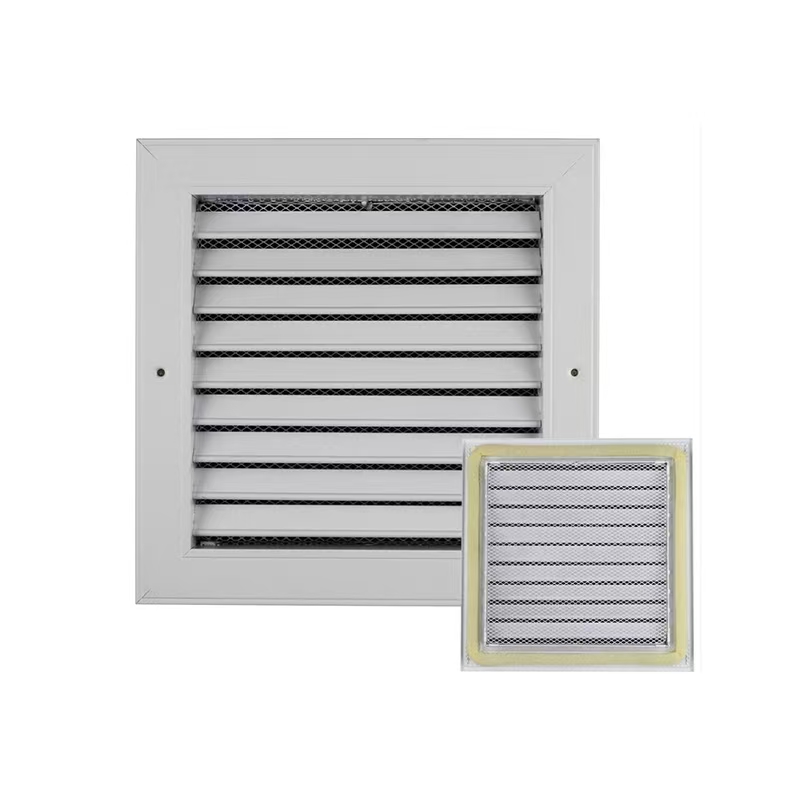
With the widespread application of generative artificial intelligence in the industrial sector, building ventilation systems are undergoing a fundamental transformation from automation to autonomy. Traditional components such as louvers, ventilation fans, dehumidifiers, fire dampers, and draught fans are evolving into "intelligent organs" with autonomous decision-making capabilities through deep integration with AI agents. This is driving the entire industry into a new stage of predictive operation and energy optimization.
I. AI-Native Components Define New-Generation Technical Standards
Cognitive Louvers: The latest louver systems feature built-in multimodal sensing modules. By identifying spatial occupancy distribution through visual sensors and dynamically adjusting local airflow organization in combination with thermal imaging data, experimental data indicates that this system can improve local thermal comfort by 40% in open-plan office environments while reducing regional air supply energy consumption by 25%.
Self-Evolving Ventilation Fans: Fan clusters utilizing federated learning technology can share operational patterns across buildings while ensuring data privacy. A smart building cluster in Tokyo has achieved coordinated optimization of 72 fans. By continuously learning building usage patterns, the system has increased the comprehensive energy efficiency ratio during peak load periods by 18.3%.
II. Digital Twin-Driven Full Lifecycle Management
Digital Twins of Fire Dampers can simulate material aging processes in real-time, providing early warnings for potential mechanical failures. An intelligent fire damper system deployed in a Singapore data center successfully reduced unplanned downtime by 92% and avoided potential business interruption losses worth $2.3 million through predictive maintenance.
Dehumidifier Performance Degradation Prediction Models can warn of performance decline 6-8 months in advance by analyzing compressor operational data. This technology has improved the accuracy of humidity control equipment replacement plans in large commercial complexes by 70%, effectively avoiding operational disruptions caused by emergency repairs.
III. Energy Networkization Spurs New Business Models
Virtual Power Plant Integration: Clustered intelligent ventilation systems are becoming important flexible resources for virtual power plants. A regional energy management project in Germany demonstrated that building ventilation systems participating in demand response can provide up to 4.7 MW of regulation capacity during grid peak periods by temporarily adjusting operational strategies, creating new revenue streams for building owners.
Carbon Flow Visualization Systems: New-generation draught fans are equipped with carbon emission measurement chips that can calculate and track airflow carbon content in real-time. This innovation enables building-level carbon footprint management to achieve device-level accuracy previously unattainable, providing a reliable data foundation for carbon trading and green financial products.
IV. Convergence of Materials Science and Digital Technology
4D-Printed Louvers utilize shape-memory polymers that automatically alter surface curvature in response to temperature and humidity changes, enabling self-adaptive airflow guidance without power. Testing under Dubai's climate conditions showed that this technology reduces building facade heat gain by 31%.
Self-Powered Fire Dampers integrate triboelectric nanogenerators that generate micro-electricity from airflow vibrations to power built-in sensors and communication modules. This achieves "zero-cable" deployment for critical safety components, significantly enhancing system reliability.
Industry Impact and Future Outlook
According to the latest McKinsey research report, ventilation systems designed with deep AI integration have a 34% lower total cost of ownership over a 10-year lifecycle compared to traditional systems. More importantly, the operational data generated by these systems is becoming a significant component of building digital assets.
The upcoming EU "Digital Building Logbook" regulation requires that all new buildings achieve full digital management of major systems by 2040. This regulatory trend is forcing accelerated transformation across the industry chain—from component manufacturers to system integrators, all must redefine their value propositions within the digital building ecosystem.
Industry experts point out that within the next five years, ventilation systems will no longer be independently operating mechanical assemblies but intelligent components of a building's "metabolic system." Companies capable of providing integrated trinity solutions of "physical components + digital twins + AI agents" will occupy strategic high ground in the multi-trillion-dollar smart building market. Ultimately, this transformation driven by the digital-native concept will reshape the fundamental relationship between buildings and people, and between buildings and the environment.
Cognitive Louvers: The latest louver systems feature built-in multimodal sensing modules. By identifying spatial occupancy distribution through visual sensors and dynamically adjusting local airflow organization in combination with thermal imaging data, experimental data indicates that this system can improve local thermal comfort by 40% in open-plan office environments while reducing regional air supply energy consumption by 25%.
Self-Evolving Ventilation Fans: Fan clusters utilizing federated learning technology can share operational patterns across buildings while ensuring data privacy. A smart building cluster in Tokyo has achieved coordinated optimization of 72 fans. By continuously learning building usage patterns, the system has increased the comprehensive energy efficiency ratio during peak load periods by 18.3%.
II. Digital Twin-Driven Full Lifecycle Management
Digital Twins of Fire Dampers can simulate material aging processes in real-time, providing early warnings for potential mechanical failures. An intelligent fire damper system deployed in a Singapore data center successfully reduced unplanned downtime by 92% and avoided potential business interruption losses worth $2.3 million through predictive maintenance.
Dehumidifier Performance Degradation Prediction Models can warn of performance decline 6-8 months in advance by analyzing compressor operational data. This technology has improved the accuracy of humidity control equipment replacement plans in large commercial complexes by 70%, effectively avoiding operational disruptions caused by emergency repairs.
III. Energy Networkization Spurs New Business Models
Virtual Power Plant Integration: Clustered intelligent ventilation systems are becoming important flexible resources for virtual power plants. A regional energy management project in Germany demonstrated that building ventilation systems participating in demand response can provide up to 4.7 MW of regulation capacity during grid peak periods by temporarily adjusting operational strategies, creating new revenue streams for building owners.
Carbon Flow Visualization Systems: New-generation draught fans are equipped with carbon emission measurement chips that can calculate and track airflow carbon content in real-time. This innovation enables building-level carbon footprint management to achieve device-level accuracy previously unattainable, providing a reliable data foundation for carbon trading and green financial products.
IV. Convergence of Materials Science and Digital Technology
4D-Printed Louvers utilize shape-memory polymers that automatically alter surface curvature in response to temperature and humidity changes, enabling self-adaptive airflow guidance without power. Testing under Dubai's climate conditions showed that this technology reduces building facade heat gain by 31%.
Self-Powered Fire Dampers integrate triboelectric nanogenerators that generate micro-electricity from airflow vibrations to power built-in sensors and communication modules. This achieves "zero-cable" deployment for critical safety components, significantly enhancing system reliability.
Industry Impact and Future Outlook
According to the latest McKinsey research report, ventilation systems designed with deep AI integration have a 34% lower total cost of ownership over a 10-year lifecycle compared to traditional systems. More importantly, the operational data generated by these systems is becoming a significant component of building digital assets.
The upcoming EU "Digital Building Logbook" regulation requires that all new buildings achieve full digital management of major systems by 2040. This regulatory trend is forcing accelerated transformation across the industry chain—from component manufacturers to system integrators, all must redefine their value propositions within the digital building ecosystem.
Industry experts point out that within the next five years, ventilation systems will no longer be independently operating mechanical assemblies but intelligent components of a building's "metabolic system." Companies capable of providing integrated trinity solutions of "physical components + digital twins + AI agents" will occupy strategic high ground in the multi-trillion-dollar smart building market. Ultimately, this transformation driven by the digital-native concept will reshape the fundamental relationship between buildings and people, and between buildings and the environment.