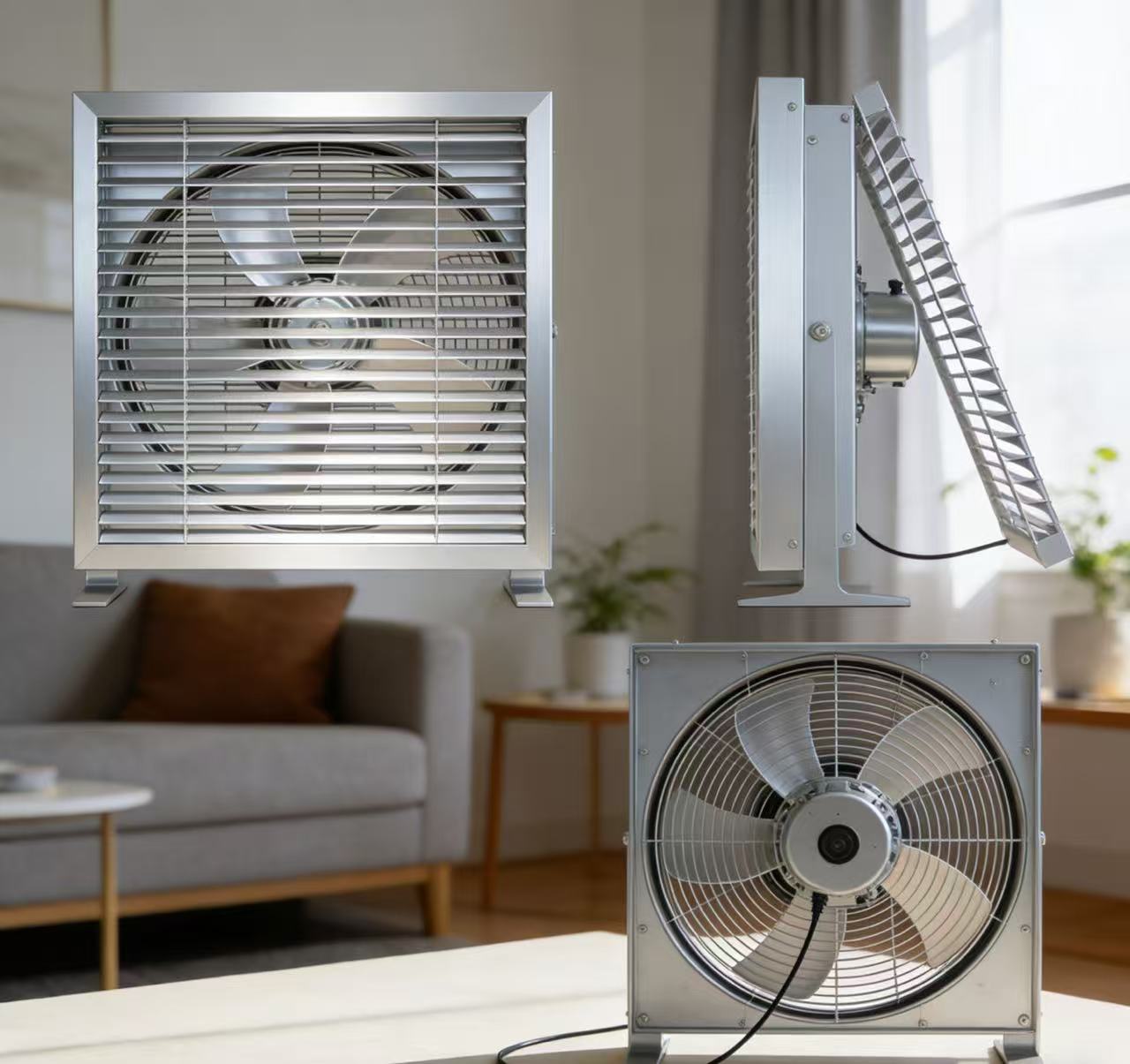
Against the backdrop of comprehensive upgrades in green building and smart building standards, the requirements for integrated building environmental control and fire safety systems are continuously increasing. Technological innovation and system compatibility for key products such as HVAC Components, Louver, Ventilation Fan, Dehumidifier, Fire Damper, and Draught Fan are becoming core drivers of high-quality industry development.
1. Systematic Integration of HVAC Components Drives Overall Energy Efficiency Improvement
Modern HVAC systems have evolved from single-function temperature control into comprehensive environmental solutions covering air quality, humidity regulation, and energy consumption management. The intelligent and modular design of HVAC Components enables core parts such as heat exchangers, compressors, intelligent valves, and sensors to dynamically coordinate with Ventilation Fans and Dehumidifiers. By monitoring indoor and outdoor environmental parameters in real time, the system can automatically adjust fresh air volume, cooling and dehumidification output, and airflow organization, significantly reducing building operational energy consumption while ensuring comfort.
Modern HVAC systems have evolved from single-function temperature control into comprehensive environmental solutions covering air quality, humidity regulation, and energy consumption management. The intelligent and modular design of HVAC Components enables core parts such as heat exchangers, compressors, intelligent valves, and sensors to dynamically coordinate with Ventilation Fans and Dehumidifiers. By monitoring indoor and outdoor environmental parameters in real time, the system can automatically adjust fresh air volume, cooling and dehumidification output, and airflow organization, significantly reducing building operational energy consumption while ensuring comfort.
2. Integration of Building Envelope and Ventilation: Functional Evolution of Louvers
Louvers are no longer merely architectural facade decorations or simple sunshading components. Modern engineering louvers integrate functions such as rain protection, insect prevention, airflow guidance, and pressure differential control, becoming a key interface for efficient connection between natural ventilation and mechanical ventilation systems in buildings. Their airtightness, structural strength, and automatic adjustment capabilities directly impact the operational efficiency of Ventilation Fans and the overall airtightness performance of buildings, also making them an important consideration in green building certification.
Louvers are no longer merely architectural facade decorations or simple sunshading components. Modern engineering louvers integrate functions such as rain protection, insect prevention, airflow guidance, and pressure differential control, becoming a key interface for efficient connection between natural ventilation and mechanical ventilation systems in buildings. Their airtightness, structural strength, and automatic adjustment capabilities directly impact the operational efficiency of Ventilation Fans and the overall airtightness performance of buildings, also making them an important consideration in green building certification.
3. Precision Humidity Control Drives Technological Iteration of Dehumidifiers
In fields such as data centers, pharmaceutical storage, laboratories, and high-end manufacturing, Dehumidifiers have evolved from auxiliary equipment to a core component of environmental control. The new generation of dehumidification equipment emphasizes coordinated control with central air conditioning systems, utilizing high-efficiency technologies such as variable frequency, liquid desiccant, or rotary wheel dehumidification to achieve precise humidity control (±2% RH) across a wide load range. Simultaneously, the equipment incorporates intelligent diagnostics and remote operation and maintenance interfaces, greatly enhancing system reliability and management efficiency.
In fields such as data centers, pharmaceutical storage, laboratories, and high-end manufacturing, Dehumidifiers have evolved from auxiliary equipment to a core component of environmental control. The new generation of dehumidification equipment emphasizes coordinated control with central air conditioning systems, utilizing high-efficiency technologies such as variable frequency, liquid desiccant, or rotary wheel dehumidification to achieve precise humidity control (±2% RH) across a wide load range. Simultaneously, the equipment incorporates intelligent diagnostics and remote operation and maintenance interfaces, greatly enhancing system reliability and management efficiency.
4. Increased Focus on Reliability of Fire Smoke Exhaust Systems: Coordinated Protection by Fire Dampers and Draught Fans
The strict enforcement of fire safety regulations has driven continuous improvement in the performance and system integration of Fire Dampers and Draught Fans. Fire Dampers must not only meet stringent fire resistance limits but also achieve rapid automatic closure in response to fire signals through various actuation methods such as electric, pneumatic, or fusible link, effectively blocking smoke spread. The interconnected Draught Fans must be capable of long-term reliable operation in high-temperature environments and, through intelligent control systems, achieve precise coordination with positive pressure air supply systems in evacuation routes, ensuring the safety of life channels.
The strict enforcement of fire safety regulations has driven continuous improvement in the performance and system integration of Fire Dampers and Draught Fans. Fire Dampers must not only meet stringent fire resistance limits but also achieve rapid automatic closure in response to fire signals through various actuation methods such as electric, pneumatic, or fusible link, effectively blocking smoke spread. The interconnected Draught Fans must be capable of long-term reliable operation in high-temperature environments and, through intelligent control systems, achieve precise coordination with positive pressure air supply systems in evacuation routes, ensuring the safety of life channels.
5. Integration of System Intelligent Control and Operation Management Platforms
Building equipment management platforms based on the Internet of Things are integrating decentralized control subsystems for HVAC Components, Ventilation Fans, Dehumidifiers, Fire Dampers, Draught Fans, and Louvers into a unified intelligent network that is visible, adjustable, and capable of early warnings. Through data analysis and predictive maintenance, users can achieve energy efficiency optimization, fault prediction, and automatic emergency response, significantly improving the efficiency of full lifecycle system management.
Industry Trend Outlook:
Building equipment management platforms based on the Internet of Things are integrating decentralized control subsystems for HVAC Components, Ventilation Fans, Dehumidifiers, Fire Dampers, Draught Fans, and Louvers into a unified intelligent network that is visible, adjustable, and capable of early warnings. Through data analysis and predictive maintenance, users can achieve energy efficiency optimization, fault prediction, and automatic emergency response, significantly improving the efficiency of full lifecycle system management.
Industry Trend Outlook:
With the advancement of the "dual carbon" goals and the enhancement of building safety standards, market demand for efficient, reliable, and intelligent building environmental and fire safety systems will continue to expand. Suppliers with full-chain product integration capabilities from HVAC Components to Draught Fans, and the ability to provide customized system solutions, will gain a leading advantage in segmented markets such as data centers, rail transit, commercial complexes, and industrial plants. In the future, component standardization, open interfaces, and system AI integration will become critical pathways for further industry advancement.