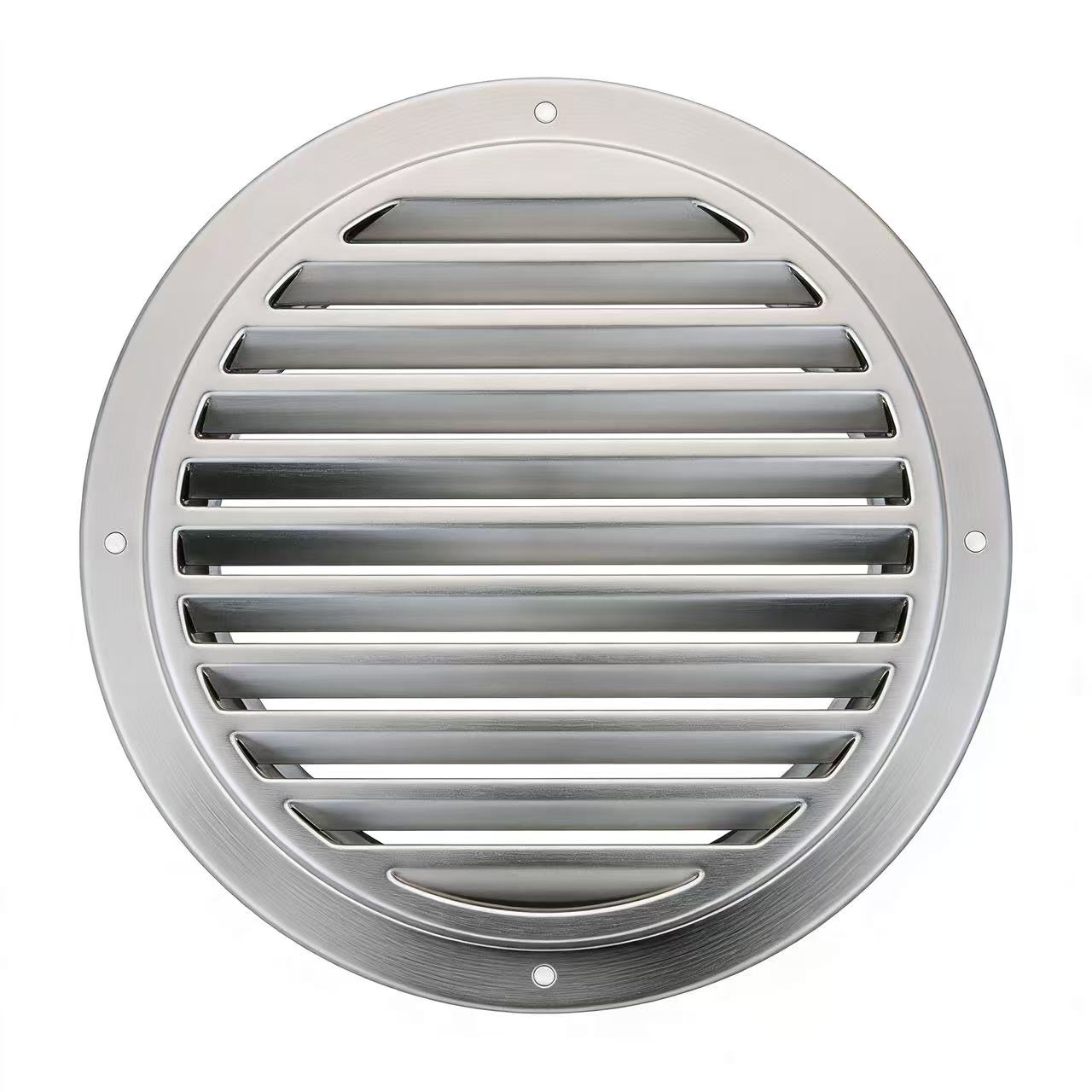
At the start of 2026, the global Heating, Ventilation, and Air Conditioning (HVAC) industry is ushering in a new cycle of technological iteration, driven by the dual forces of the "dual carbon" goal and digital transformation. As the core support for system operation, the innovation and upgrading of HVAC Components have become the key to breaking through industry bottlenecks. Critical components such as Louver, Ventilation Fan, Dehumidifier, Fire Damper, and Draught Fan have achieved breakthrough progress in intelligence, high-temperature resistance, energy efficiency, and other dimensions, providing more efficient and safe solutions for commercial buildings, data centers, high-end manufacturing, and other scenarios.
In the field of building ventilation and fire safety, the technological upgrading of Fire Damper has become the focus of the industry. With the in-depth integration of the Internet of Things (IoT) technology and fire protection systems, the new generation of intelligent fire dampers has realized multi-parameter sensing and remote monitoring functions. By integrating temperature, smoke sensors, and cloud platform monitoring modules, they can real-time feedback operating status and early warn potential risks. More notably, fire dampers made of ceramic matrix composites have a fire resistance temperature exceeding 1000℃, and combined with graphene coating sealing technology, they not only extend the service life of equipment but also reduce later maintenance costs, being widely used in special scenarios such as super high-rise buildings and data centers. Meanwhile, as an important terminal component of ventilation systems, Louver is deeply integrated with intelligent control technology. By linking with the Building Automation System (BAS), it can automatically adjust blade opening according to outdoor wind speed and air quality, ensuring ventilation efficiency while reducing energy consumption, and has become a standard component in green building certification projects.
The optimization and upgrading of ventilation and humidity control systems have become important starting points for the HVAC industry to practice the concept of energy conservation. Ventilation Fan is evolving towards low noise, high efficiency, and multi-functionality. A number of silent products integrating ventilation, deodorization, and dust removal functions have been launched on the market one after another, with operating noise controlled below 40 decibels and rated air volume reaching 765 cubic meters per hour, widely applicable to kitchens, bathrooms, offices, and other scenarios. In industrial and precision scenarios, the collaborative application of Dehumidifier and ventilation systems has become increasingly mature. For example, in semiconductor cleanrooms and biopharmaceutical workshops, through the linked control of dehumidifiers and ventilation fans, the indoor humidity can be accurately maintained at around 45% RH, meeting ISO Class 1 cleanliness requirements when combined with high-efficiency filtration systems. In the data center field, the integrated solution of dehumidifiers and cold source systems effectively solves the problem of temperature and humidity imbalance during the operation of high-computing-power equipment, providing important support for reducing PUE (Power Usage Effectiveness).
As the power core of smoke exhaust and ventilation systems, Draught Fan is undergoing a comprehensive innovation in energy-saving technology. The energy consumption of traditional draught fans accounts for more than 30% of the total energy consumption of building ventilation systems. Nowadays, through the adoption of permanent magnet synchronous motors, CFD-optimized impeller design, and other technologies, energy consumption has been reduced by 30%-50%. Draught fans with dual-speed motor design can realize mode switching of "low-speed operation for daily ventilation and high-speed startup for fire smoke exhaust". Equipped with intelligent control systems, they can automatically adjust operating status according to smoke concentration and temperature, maximizing energy conservation while ensuring fire safety. In large open spaces such as tunnels and gymnasiums, the collaborative linkage system of draught fans, louvers, and fire dampers can quickly achieve smoke dilution and exhaust through directional air flow control technology, gaining valuable time for personnel evacuation.
Industry analysis points out that the global HVAC market size is expected to expand at a compound annual growth rate of 4.5%-5.5%, exceeding 250 billion US dollars by 2030, and technological innovation of core components will become the main driving force for market growth. With the deepening of the "dual carbon" strategy and the popularization of intelligent technology, HVAC Components will further evolve towards "high efficiency, digitalization, and scenarioization". The collaborative integration of Louver, Ventilation Fan, Dehumidifier, and other components will continue to improve, and the safety performance and energy efficiency of Fire Damper and Draught Fan will also keep breaking through. In the future, the independent innovation capability of domestic core components will continue to strengthen, and their right to speak in the global supply chain is expected to further improve, injecting strong momentum into the high-quality development of the industry.